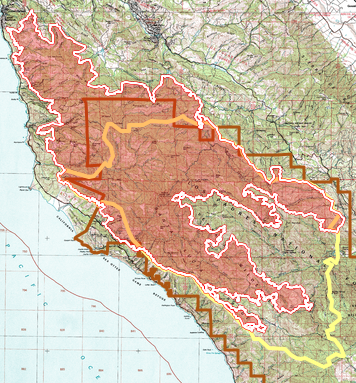
The recent Timber and Plaskett wildfires, with the former re-burning some of the area burnt by the 2016 Soberanes Wildfire [July-October], brought back memories of that fire.
Contains panorama photos best viewed on wide screen or in landscape orientation
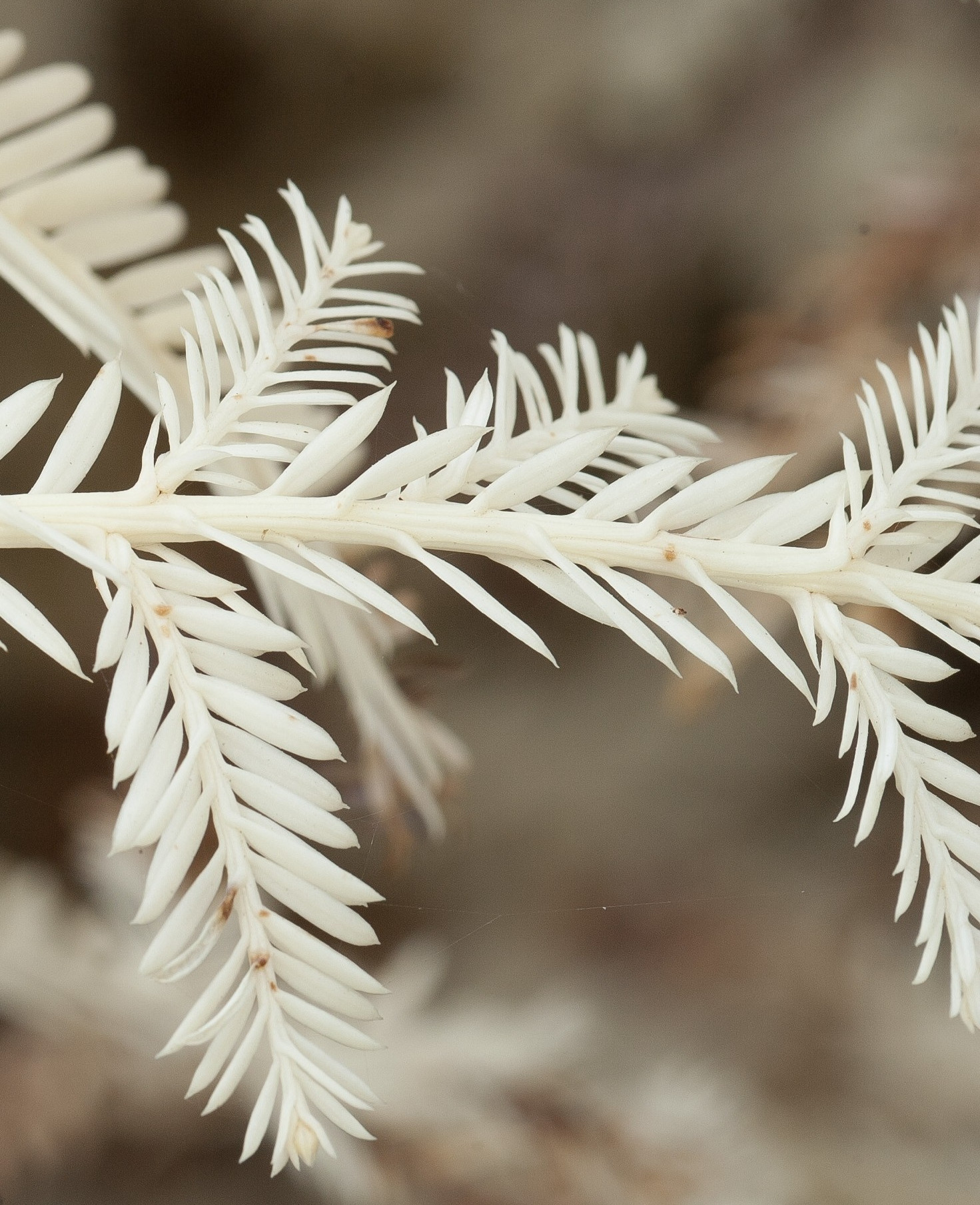
I doubt you’ve seen a white plant. “Plants” (here used in the “strict sense”, aka Viridiplantae, which excludes fungii among others) use green chlorophyll to produce the energy they need to grow and thrive.
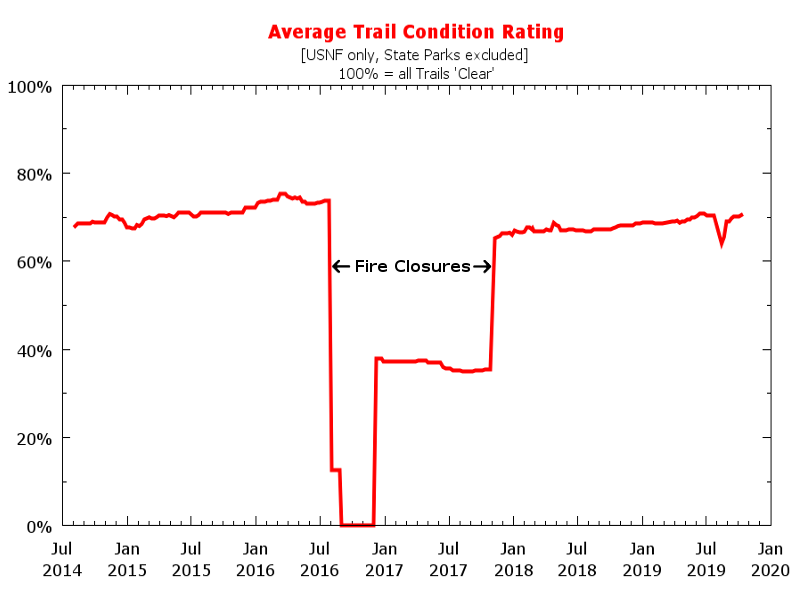
Nature is relentlessly degrading the National Forest trails in Big Sur. And the US Forest Service no longer maintains them. So volunteer trailcrews have been pushing back – lopping, sawing, and doing treadwork to keep the trails passable. But are they rebuilding the trails as fast as nature is destroying them??
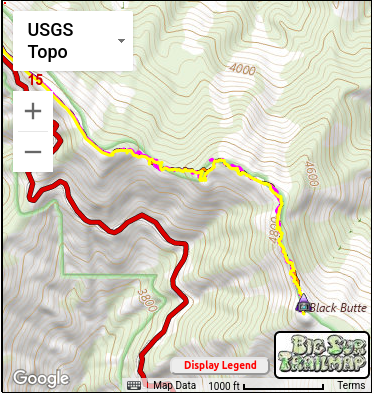
Many don’t realize that Black Butte is the fifth highest peak in the Ventana (and in Monterey County), only 35 ft lower than South Ventana Cone. In fact, some have not even heard of Black Butte! Yet the views from there are magnificent – the summit is narrow, so gives a 360° panorama from a 4936 ft elevation.
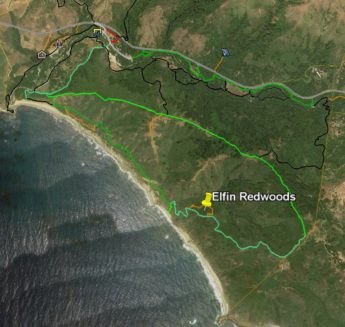
Elfin Redwoods – Andrew Molera SP (Click for interactive map)
I was ignorant – I called them Cypress trees. Actually, I knew they didn’t quite look like Cypress – but their wind-blown shaping was akin to what I’ve seen in Cypress and I didn’t know what else they might be. Surely not Redwoods, those magnificently tall trees we here on the Central Coast know so well – these trees were only 15-20 ft high.
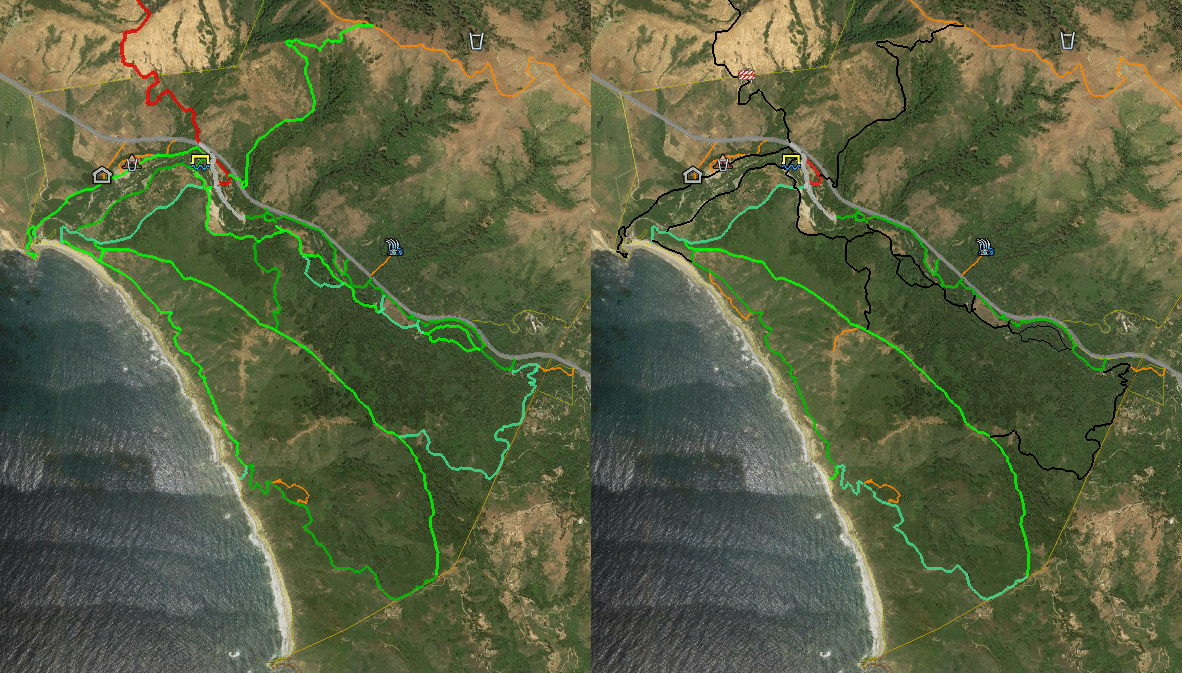
2016 & 2017 Molera SP Trailmaps (click for larger image)
I went out to see what the current Molera State Park looks like. Only the Post Summit ridgeline was burnt by the 2016 Soberanes fire – but the following winter’s heavy rainfall events caused the Big Sur River to overflow and flood lower sections of the park, notably its parking lot and campground. The park was closed for a long time, then re-opened this summer but with many trails closed. Currently only the Bluffs, Bobcat, Creamery Meadows, Panorama, Ridge, and Spring Trails are open.
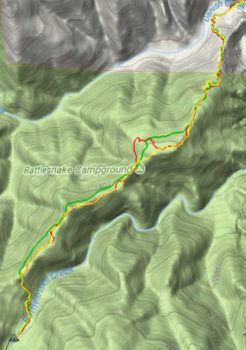
Round trip: 12 miles & 4000 ft gain & 12 hours Hike date: November 25, 2017
Route: Out (red) Return (yellow) Trail (green) (ignore “Rattlesnake Campground” label on map) (click for larger, interactive map) (kmz file)
Waking at 3:15AM is not my ideal way of starting a day – but today lack of daylight was not going to keep me from reaching Rattlesnake Camp. Last time I’d had to abort my attempt due to running out of daylight and energy. This time I would start earlier and would avoid the difficulty of trying to follow Rattlesnake Creek Trail – instead, it would be a bushwhack.
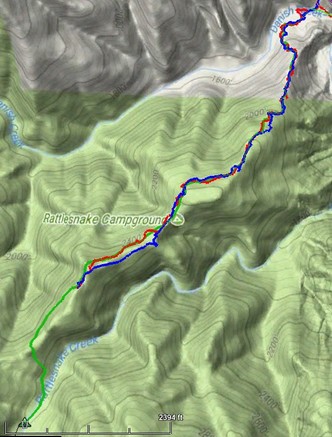
Round trip: 11.2 miles & 3760 ft gain & 11 hours Hike date: November 12, 2017
Route: Outbound (red) Return (blue) Trail (green) Note: Rattlesnake Camp NOT where map depicts (click for larger, interactive map)
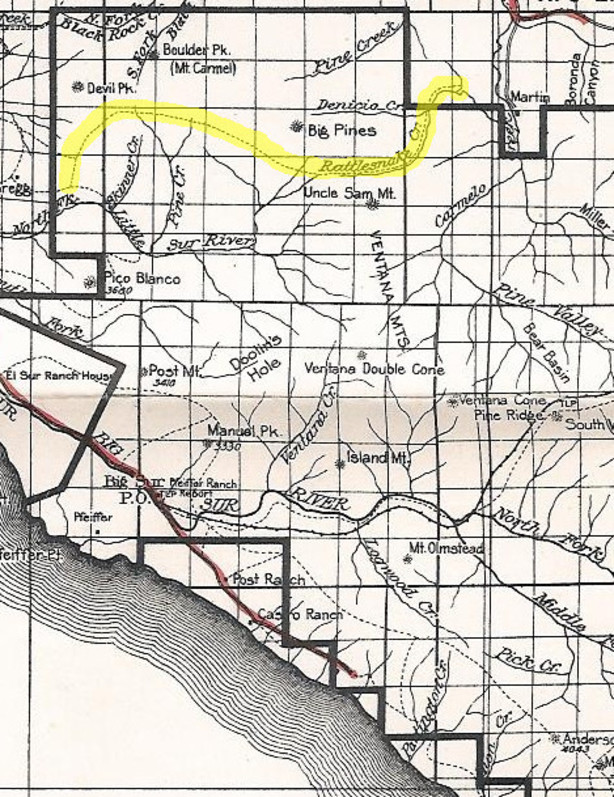
Sadly, the lower half of Rattlesnake Creek Trail, below Rattlesnake Camp, is now impassable. This venerable trail was one of the oldest in the Ventana wilderness, having appeared on a 1921 quadrangle when few Ventana trails existed.
[Sorry folks, long post and not many photos – was spending all my time deciding where to go.]
1924 National Forest map (click for full-size image)
My “Finding the Carrizo Trail” post glossed over the fact that the western end of the Carrizo Trail of that time (2009) differed significantly from the current (2017) route. In my “Maps can lie” post, describing my mapping of that end, I had followed the route described in VWA Trail Reports: leave the North Coast Ridge Trail at a flag marking a ridge. At the time I’d noted the initial section was rough and sketchy, tread only becoming evident after leaving the ridge. I was later enlightened by Paul Danielson as we were hiking along the North Coast Ridge Trail – shortly after the Gamboa Trail junction, 0.6 miles before the ridge, he pointed out a spot where the “historic” Carrizo Trail junction had been. That route had become overgrown and abandoned, so hikers were instead taking a shortcut along an old dozer cut along the ridge.
In July of 2010, trailworker par excellence Robert Parks took it upon himself to restore that overgrown “historic” section. Over six worktrips, he and some helpers (including Paul Danielson) hacked and sawed their way through that brush. Much of the tread was still intact, so following the route itself was not too difficult. In October the final section was completed and a celebration held.
Last Wednesday a fire broke out at Arroyo Seco, near the junction of ArroyoSeco-Indians Road and the road to the adobe. It was reportedly brought under control relatively quickly through aircraft retardant drops and the local USFS fire crew. I went out to see the aftermath.